
The only way…

Video
Sermon: Sunday, 26th February, 2023
Speaker: John Johnstone
Scripture: Luke 22:39-46

In our passage today (verse 39), we read that Jesus went out ‘as usual’ to the Mount of Olives. We could easily gloss over the phrase ‘as usual’. However, we need to bear in mind that Jesus knows he is walking into a trap. He knows that Judas knows this place, the Garden of Gethsemane, and had he wanted to avoid the cross, Jesus could have chosen a secret location. He does not. In love, in order to rescue sinners, he goes to the usual place.

“The Shepherd is in the process of laying down his life for the sheep.” (Hendriksen)

Let’s try and keep the love of Jesus in the foreground as we study this passage. Sometimes we speak about people having the ‘weight of the world on their shoulders’. Here, Jesus is about to take the sin of countless people in his shoulders. He is aware that soon he will be forsaken by his Father. And yet, with unmatched love, he still manages to think about other people. He is concerned about his disciples, and the temptations they will face to deny him and abandon the faith.

1. Jesus’ request
‘Pray that you will not fall into temptation.’ (Luke 22:40)

Jesus knows that temptation is only avoided by continued dependence on God in prayer. Not only does Jesus tell them this in words, but he also models this principle in his own actions. Jesus himself is facing unparalleled temptation here. All the forces of evil want to see Jesus turn away from the cross. He faces temptation at its most intense. But he knows what to do, and he depends on his heavenly Father.

What do you do in the place of temptation? You might be tempted to lose your temper, or to look at something online that you shouldn’t or you might be thinking proud thoughts. You might be tempted to go for days without opening your Bible and enjoying fellowship with God. You might be tempted to focus too much on money or pleasure. What should you do? You might be tempted to skip church, or live in a way that you know God tells you not to. You are tempted to ignore God and his instructions. What should you do? It might sound too simplistic to say, ‘Just pray.’ And yet, that’s exactly what Jesus wants the disciples to do and it’s what he wants you to do too. Sometimes temptations are subtle. Yet we can still fall into them. For example, the temptation to ‘look after number one’ to live life with your own needs and desire and personal happiness at the centre. This is the culture we are living in. Or the temptation to just fit into our surroundings.

Why do we need to pray? Why is prayer the solution? Again, it is simple. We are too weak and frail to resist temptation in our own strength. In the parallel account in Mark’s Gospel, Jesus says: ‘The spirit is willing, but the flesh is weak.’ (Mark 14:38) My flesh is weak. Your flesh is weak. Paul says a similar thing about Christians in his letter to the Romans. ‘I do not understand what I do. For what I want to do I do not do, but what I hate I do.’ (Romans 7:15) We end up doing things we don’t want to do deep down because our flesh is weak.

So, what can we do with all of this teaching? Perhaps, when we wake up in the morning, we need to think about the day ahead and pray ‘Lord, you know how weak I am – please help me in these things’. Perhaps there’s a besetting sin, a sin which trips you up again and again, and every day you might have to keep on praying the same thing. We also have a promise to help us in this : ‘And God is faithful; he will not let you be tempted beyond what you can bear. But when you are tempted, he will also provide a way out so that you can endure it.’ (1 Corinthians 10:13) We can turn that promise into a prayer: ‘Father, please provide a way out for me today’.

We do not just pray: we also have to act. If we’re in circumstances where we’re likely to be tempted then there’s not much point in praying that God would keep us form it – if we walk straight into it. Sometimes we want to sin and invite temptation. We put ourselves in that place and then we fall into sin. Total avoidance of sinful situations is the order of the day.

A man was looking for a new chauffeur asked 3 interviewees how close they could drive to the edge of a cliff. The first woman said, ‘Within 2 feet. The second man said, ‘Within 6 inches.’ And the third woman said, ‘I wouldn’t drive anywhere near it.’ She got the job. When it comes to our temptations, it is wise to keep away from the edge of the cliff.

Friends, let’s ensure we remember the basics of the Lord’s Prayer and pray as Jesus instructed: ‘And lead us not into temptation, but deliver us from the evil one’ (Matthew 6:13). The disciples don’t manage to do this, and end up falling asleep (verse 46). We are so often like them. But our model here is Jesus, and not the disciples.

2. Jesus’ prayer
On the one hand, Jesus’ prayer here is so unique. None of us will ever have to endure what he was enduring immediately before and during the crucifixion. One the other hand, Jesus’ prayer is a model prayer for us. Luke only gives us a line, and yet there is so much depth in these words: ‘Father, if you are willing, take this cup from me; yet not my will, but yours be done.’ (Luke 22:42) There are two aspects to this prayer: there is Jesus’ honest plea; but there is also his readiness to submit to the will of God. This is how we should be praying.

What should we make of Jesus’ wish for the cup to be taken away from him? Has Jesus come all this way and ‘set his face towards Jerusalem’ only to falter in the last hours? At first glance, we might even feel disappointed by Jesus’ request. He seems to be wavering. ‘In any case, I must press on today and tomorrow and the next day – for surely no prophet can die outside Jerusalem!’ (Luke 13:33) Why have second thoughts now?

We need to understand what Jesus means when he speaks of a ‘cup’. What is this cup? It is the cup of divine wrath on human sin. It is a terrible cup. ‘In the hand of the Lord is a cup full of foaming wine mixed with spices; he pours it out, and all the wicked of the earth drink it down to its very dregs.’ (Psalm 75:8) :

‘This is what the Lord, the God of Israel, said to me: ‘Take from my hand this cup filled with the wine of my wrath and make all the nations to whom I send you drink it.’ (Jeremiah 25:15)

Jesus knows he is about to experience God’s judgment on human sin. It’s hard for us to imagine what it must be like to be perfect, but Jesus is perfect, and he is recoiling at the thought of becoming sin for us. ‘God made him who had no sin to be sin for us, so that in him we might become the righteousness of God.’ (2 Corinthians 5:21)

“He became the greatest sinner that ever was.” (Luther)

The greatest murderer; the greatest adulterer; the greatest blasphemer; the greatest law-breaker. He would answer for the sin of the world. He would answer for your sin and for my sin.

Jesus is exploring the limits of the will of God. Is there another way Jesus can save his people? Or, is the only way by drinking the cup of God’s wrath himself? Jesus is saying, in effect, ‘Father, if there is another way, please tell me now.’ This is a model prayer for us: Jesus makes a request but qualifies it by saying: “… yet not as I will, but as you will.’ He is willing to carry out the will of the Father, no matter what it costs him.

Here is a challenge: is this the way you pray? You are free to ask your Father for anything you want and with honesty pour your heart out to him, but always, above everything else you desire for God’s will to be done. ‘If it be your will’ should never become something we just tag onto our prayers. It’s just at the end of the day, we believe God knows best. We don’t want our will to prevail over his.

If we’re honest, sometimes it’s hard to pray like this! We’ve been praying for those seriously unwell in the church family. It’s easy just to pray – ‘Lord, restore that person to us.’ It’s harder to pray: ‘Lord, please heal them, but not our will but yours be done’, knowing that God’s plan might be to take them ‘home’. Pray honestly. Pray with all your emotion and pain. But pray submissively, trusting that God knows best!

3. Jesus’ suffering
‘An angel from heaven appeared to him and strengthened him. And being in anguish, he prayed more earnestly, and his sweat was like drops of blood falling to the ground.’ (Luke 22:43-44)

It’s amazing to think of God the Father sustaining Jesus by sending an angelic to strengthen him. I’m not sure specifically how Jesus is strengthened at this point – we’re not told. But it does remind me of another occasion when Jesus did battle with Satan, in the wilderness. ‘… he was in the wilderness forty days, being tempted by Satan. He was with the wild animals, and angels attended him.’ (Mark 1:13)

“How often we find Heaven’s resources suddenly appear for earth’s emergencies.” (Dale Ralph Davis)

Perhaps you are going through extremities of your own just now. Cry out to your heavenly Father in faith, and see what he will do to sustain you. It might not be what you expect, or even what you want, but it will be what is best. And it will strengthen you.

Jesus’ anguish is so great that his sweat was like drops of blood.

“No one ever feared death as much as this man.” (Luther)

The blood in his sweat speaks of Jesus’ physical and emotional trauma. How should we respond to this? We read stories of Christian martyrs facing death with great calmness. Why then can Jesus not do the same? The sorrow is not just because he is facing a death- nor even because he will face crucifixion. This is no ordinary death. For Jesus, death means the judgment of God the Father. He is overwhelmed by the huge burden he will have to carry- the sin of the whole world. He must face this alone – no one will be there to help him.

Why was this suffering necessary? The debt came about by human sin and so a human price must be paid. The punishment we deserve so great, that only a sacrifice of infinite worth could pay it. This is why Jesus must drink the cup of wrath. This is why the Father says, ‘No.’ to his Son. We’re the ones who ought to be forsaken by God.

“…he entered our God-forsaken condition so that we might share his God-accepted relationship to the Father!” (Sinclair Ferguson)

And so, there was no other way for human beings to be saved from Hell. There were no other options. No other religion could save us; only the blood of Jesus can save, and not our own efforts. We cannot be saved by trying our best to please God.

Behold the man upon a cross, my sin upon his shoulders;
ashamed, I hear my mocking voice, call out among the scoffers.
It was my sin that held him there, until it was accomplished;
his dying breath has brought me life – I know that it is finished.
You’re weaker than you think

Sermon: Sunday, 19th February, 2023 Video
Speaker: John Johnstone
Scripture: Luke 22:31-34

When my children were younger, they’d often walk along walls, which was a bit concerning. There’s a lot of danger when you are walking along a wall. However, the thing was, myself and Sarah were always there, and we had a hold of them.

1. An adversary
Christians are people who believe that there’s much more going on in life than what we can see with our eyes. There is a whole unseen spiritual realm out there. In fact, the greatest reality in the universe is God himself, and we know that he is invisible. Angels exist, but are invisible to us most of the time. And fallen angels, or demons, also exist.

‘For our struggle is not against flesh and blood, but against the rulers, against the authorities, against the powers of this dark world and against the spiritual forces of evil in the heavenly realms.’ (Ephesians 6:12)

Christians are unashamed to believe in the supernatural. As Jesus addresses the disciples, he gives them remarkable insight into what is going on in this unseen realm. The disciples have an adversary and he is called Satan. He is a fallen angel. ‘Simon, Simon, Satan has asked to sift you as wheat.’ (Luke 22:31) The ‘you’ here is plural, speaking of Satan’s attacks on all of the disciples. And by extension, this includes us today.

Jesus also states Satan’s purpose in attacking Christians. He wants to sift them as wheat. This means that he will place severe trials before the disciples, designed to separate them from God, and from their faith in God’s promises, just as a kernel of wheat is separated from the chaff in the sifting process. What does it mean when it says: ‘Satan has asked to sift you?’ This means that Satan is not able to attack Christians any way he chooses. He needs permission from God in order to do so! This might sound strange to us, but it’s actually a great comfort. In a world full of evil, including supernatural evil, it is good to know that Satan is on a leash, and has no access to the children of God, without God granting the permission. What does this remind you of? It’s very much like what was going on in the book of Job. ‘But now stretch out your hand and strike everything he has, and he will surely curse you to your face.’ The Lord said to Satan, ‘Very well, then, everything he has is in your power, but on the man himself do not lay a finger.’ (Job 1:11-12)

Satan’s malice and hatred towards Job is clear for all to see. But it is also clear that Satan is ultimately under the authority of God and is hemmed in by that authority. Satan wanted to sift Job, he’s going to sift Peter, and he does the same today to all Christians.

You can put your own name in this passage, if you are a Christian. ‘Fiona, Fiona, Satan has asked to sift you.’ ‘Craig, Craig…’ Satan wants to separate you from your trust in Jesus. He wants us to doubt God’s goodness and God’s promises. And it’s not even always obvious to us that this is happening. He is subtle. ‘… Satan himself masquerades as an angel of light.’ (2 Corinthians 11:14) We need to take this seriously. I wonder if Jesus calls Peter ‘Simon’ to underline his weakness and frailty. He doesn’t call him ‘Peter’ here, which means ‘the rock’. Like Simon, we too are weak and frail and sinful. Do you ever wonder why the Christian life is so hard? Do you ever wonder why you’ve fallen so many times? It’s because of your own weakness and sinfulness and it’s also because we have a dangerous enemy who wants to bring us down.

“There is no enemy so dangerous as that restless, invisible, experienced enemy, the devil.” (J C Ryle)

2. An advocate
We don’t want to be depressed by the passage before us this morning, and we don’t need to be! Because our dangerous enemy isn’t the strongest being in the battle for our souls. We have a wonderful Advocate in Jesus Christ. If all we had was a terrible adversary, then how could be ever keep on the Christian path? How could we finish the race? We’d leave Jesus forever. But we have far more than a dangerous enemy. We have Jesus, who is praying for us. What is he praying? V32: But I have prayed for you, Simon, that your faith may not fail.

“The continued existence of grace in a believer’s heart is a great standing miracle. His enemies are so mighty, and his strength is so small, the world is so full of snares, and his heart is so weak, that it even seems at first sight impossible for him to reach heaven. The passage before us explains his safety. He has a mighty Friend at the right hand of God, who ever lives to make intercession for him.” (J C Ryle)

This is a wonderful truth for us! ‘… he is able to save completely those who come to God through him, because he always lives to intercede for them.’ (Hebrews 7:25)

As Christians, we often think of what Jesus has done for us in the past, dying on the cross for our sins. However, we need to think far more about what he is doing for us right now. Just as he prayed for Simon Peter, he also prays for us. He prays that our faith would not fail. That’s why Paul can say : ‘… being confident of this, that he who began a good work in you will carry it on to completion until the day of Christ Jesus.’ (Philippians 1:6)

Let’s get more personal. If you’re a true follower of Jesus, and you screw up and make a right mess of something, you will probably feel very far from God. You might find it a real struggle to pray or open your Bible. You might just feel guilty, ashamed, and that you’ll never get out of the quicksand we feel as if we are in. During those times, Jesus is right next to you praying for you. He is interceding for you in prayer saying: ‘Father, don’t let go of them’ and ‘Father, bring them to a place of repentance’ and ‘Father, restore their joy in the Lord and help them to serve you once more’.

This short section of Luke is quite amazing. We find two things placed side by side: we have an adversary who tries to destroy our faith, and we have an advocate who prays that our faith would not fail. Whose strategy do you think will win in the end? God will keep you by his power. Yes, you may fail. Yes, your faith might burn low, but it will never be extinguished. Why not? Because Jesus is praying and praying that sustains you by his almighty and unsurpassable power.

Perhaps you are struggling in your faith today. Perhaps you are far from God and wonder what the future holds. You need to rub verse 32 right into your heart just now: ‘But I have prayed for you… that your faith may not fail.’

Notice too what Jesus does not pray for Simon Peter. He doesn’t pray here that he would be taken out of the trial. Like it or not, God allows these trials for a purpose, and we’ll come to that shortly. Rather, Jesus prays that Peter’s faith would be sustained.

3. Arrogance
Jesus prophesises that Peter will fail. In verse 32, when Jesus says ‘and when you have turned back’ this implies that Peter is going to sin, and then he is going to have to repent. But Peter doesn’t understand how dangerous Satan really is. Nor does he understand his own weakness. He says in verse 33: ‘Lord, I am ready to go with you to prison and to death.’ I’m sure Peter really believes this. But he is grossly overestimating his own strength and underestimating his need to rely on Jesus in the time of temptation. Relying on himself will have disastrous consequences. He is overconfident.

Each one of us has to go back to 1 Corinthians 10:12 on a regular basis: ‘So, if you think you are standing firm, be careful that you don’t fall!’ Jesus punctures Peter’s pride by detailing just how he is going to fail: Jesus answered, ‘I tell you, Peter, before the cock crows today, you will deny three times that you know me.’

Young people, you might hear your parents warning you about the dangers of alcohol, or drugs, or of having sex outside of marriage, and like Peter you might say or think: ‘That might happen to other people but it will never happen to me’. That’s exactly what Peter said. The right way to think is this: like Peter I am weak and could easily fall into that temptation. Those of us who have been Christians for a longer time are also just like Peter. We must never say, ‘That will never happen to me.’ ‘I’d never have an affair.’ ‘I’d never stop going to church’. ‘I’d never mistreat my friends or family.’ You might even think that you would never deny knowing Jesus, and then there’s a conversation at work where Christianity is mocked, and Jesus is mocked, and you don’t say a word. You deny Jesus.

Here’s the truth: unless we live each day sincerely asking God for help in all areas of your life, we are in great danger. We must live actively depending on the grace of God. And God’s grace comes to us through prayer, reading the Scripture, in Christian fellowship at church and in the Lord’s Supper. God uses these things to keep us strong.

4. Aim
Why does God allow Satan to tempt us? What is God’s aim for us in these testing times? I think part of the answer is found in verse 32: ‘And when you have turned back, strengthen your brothers.’ There’s a beautiful truth here: God is so gracious and powerful that he can even take our failures and work them for good. Of course, this is no reason to be flippant about sinning against the LORD. But it ought to give us tremendous hope when we find ourselves in a spiritual mess.

Did anything good come out of the time when Peter denied his Saviour? Of course, it did. Think of an older, more mature Simon Peter. There was much less pride and more prayerful dependence on God’s grace. There was a deeper appreciation of God’s forgiveness which must have helped him to forgive others. Think of Peter instructing other Christians and what he could tell them from his first-hand experience. He could tell them about just how bitter sin is and warn others of the danger of spiritual pride. He would also be able to minister to Christians who had fallen into deep sin; he would be able to encourage them to repent and return to Christ. He could explain to them that it is possible to be useful in God’s service again, if we humble ourselves before him.

Friends, the same is true for those of us who have fallen into sin, but have been forgiven and restored by Jesus. We will be able to encourage and strengthen the weak, and to do so with genuine humility and gentleness, because we know what it is like to fall ourselves. If we are discipling newer Christians, we can warn them of the dangers of temptation and sin and of the need to guard our lives and hearts with prayer.

“He who has been through deep waters has the experience that enables him to be of help to others.” (Leon Morris)

Peter stumbled but was brought back to a place of faith and loyalty to Christ, through the power of God. Jesus wants him, in turn, to strengthen other Christians who stumble and fail. You might well be able to do this too.

It’s really important that older and younger Christians mix well together in the church. I hate the idea of segregating by age, having a service for young people and a more traditional one for older people. It’s totally unbiblical and means that younger Christians miss out on the wisdom older Christians are able to share. We need to be creative in church to ensure we mix together as much as possible, even as we enjoy another church lunch together.

As we close, becoming a Christian isn’t about what we can do for God but about what God can do for us. When we cry out to him for forgiveness, he saves us. And as we go on in the Christian life, he keeps us.

Singing from the same song sheet

Same song sheet

Developing a core repertoire

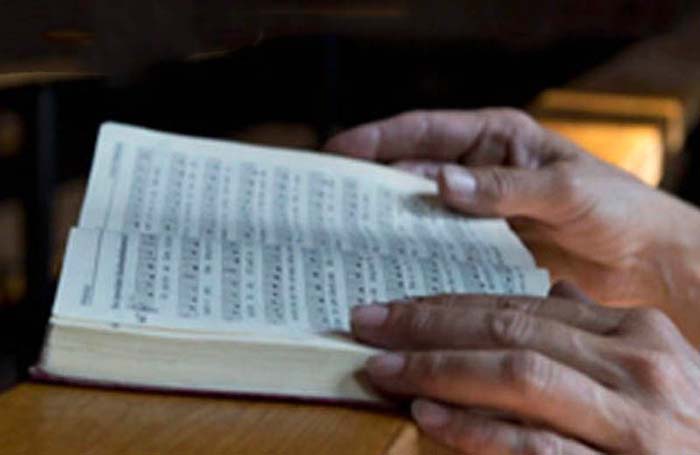
Sacred music has always been part of my life. My Mum sang and played piano and my Dad played piano and accordion. He also sang in the Male Voice choir at church. As a family, across the generations, we sang hymns and choruses for as long as I can remember. I grew up in a church with a strong tradition of quality music and congregational song and I sang there as a soloist, in the choir and as part of a youth group.

Most of us have favourite hymns that have special meaning or significance to us and so, to one degree or another, we almost unthinkingly develop a core repertoire; a selection of music that’s both familiar and uplifting. Actively developing and maintaining a core repertoire is, in fact, common practice among musicians across all genres. I believe that this practice translates very readily to family worship and congregational song and, indeed, that it’s fully appropriate. It all comes down to why we sing.

‘Great is the Lord, and greatly to be praised and His greatness is unsearchable. One generation shall commend Your works to another and shall declare Your mighty acts.’ (Psalm 145:3-4)

We can see from the words of this wonderful Psalm that we sing in praise of our matchless God. We can use our shared repertoire to declare His greatness and pass on our knowledge of Him to future generations. What’s more, a thoughtful and studied repertoire underlines Scripture and reinforces our understanding of theology so we can sing thoughtfully, worshipfully and with understanding. ‘I will sing with my spirit, but I will also sing with my understanding.’ (1 Corinthians 14:15b)

In his letter to the Colossians, the apostle Paul exhorted the congregation to ‘…let the message of Christ dwell among you richly as you teach and admonish one another with all wisdom through psalms, hymns, and songs from the Spirit, singing to God with gratitude in your hearts.’ (Colossians 3:16)

So we can see that our praise is to bring glory to God, to teach us wisdom, to build up one another and to express our gratitude. In effect, our core repertoire serves to nurture our faith and our church community.

Is there a difference between core repertoire for corporate, family and private worship? Yes, I think so but there’s plenty of room for significant overlap. My own personal repertoire tends to be more meditative but it’s good to sing music at home that we expect to sing in church. What are your favourite psalms and hymns?

When faith takes wing

When faith takes wing

Driving home from Crail a week or so ago, we noticed long sections of the hedgerow draped with what looked like spiders’ webs. From a visit to the Cornalees Centre in the hills above Greenock many years ago, when we saw a whole tree covered in a similar way, we knew that this wasn’t the work of spiders. The webs protect the caterpillars of one of the species of the Ermine Moth. The webs enable the caterpillars to feed to their hearts content on the leaves of the hedge or tree, safe from predators. They will strip every leaf from the host before departing.

The ranger at Cornalees, from whom we received all this information, also told us something that has stuck with me all this time. The caterpillars pupate, and when the moth finally begins to break out from the chrysalis, it has a tremendous struggle. Seeing this, well-meaning people sometimes try to help the moth escape by breaking off bits of the chrysalis. This is a disaster! It’s the effort the moth goes through to break out that gives its wings the strength to fly. Without that struggle it will never have the ability to take to the air. Far from helping, the people who do this are condemning the moth to an earthbound existence, making it easy prey for birds and other predators.

That set me thinking. It’s natural for us to try to help and protect those we love. We want to keep them from harm, and to make life as easy as possible for them. So we have a tendency to think that if God allows problems or suffering to enter our lives, He doesn’t love us. Nothing could be further from the truth! Speaking of the trials that afflict us all, the apostle Peter writes: ‘These have come so that your faith – of greater worth than gold, which perishes even though refined by fire – may be proved genuine and may result in praise, glory and honour when Jesus Christ is revealed.’ (1 Peter 1:7) God is accomplishing something precious in us as we continue to trust Him in our difficulties. Our faith is shown to be the thing of beauty that it’s meant to be.

James says something similar about the strength given to our faith through the struggles we have to endure. ‘Consider it pure joy, my brothers, whenever you face trials of many kinds, because you know that the testing of your faith produces perseverance.  Perseverance must finish its work so that you may be mature and complete, not lacking anything.’ (James 1:2-4) Far from harming us, the struggles through which our loving heavenly Father brings us, enable faith to take wing and soar, helping us to arrive at the glorious destiny He purposes for us.

God’s transforming grace

God's transforming grace

We enjoyed another lovely walk last week – along the abandoned railway line at Lower Largo. I counted more than thirty different types of wild flowers blooming on, and alongside, the path. Meadow Cranesbill was at its peak; but there were also plenty of Knapweed, thistles, wild roses, Scabious, Bird’s Foot Trefoil, Poppies, and countless others for which I don’t know the names. Hundreds of moths and butterflies were taking advantage of the bonanza to feed on the nectar – including the Six-Spotted Burnet Moth that loves the knapweed, while its caterpillars feast on Bird’s Foot Trefoil. The moth has glossy black wings with, as the name suggests, six spots. The pictures I’ve seen colour the spots red; but those we saw seemed more like fluorescent pink – dazzling! Our noses were treated to the scents of Meadowsweet and Rosa Rugosa. To one side of us we could hear the lapping of the waves on the shore, and on the other, the song of the skylark – though they were hard to spot against the bright blue sky.

And, of course, this abundant beauty exists on what would have been a scar on the landscape, when the railway line was removed as part of the Beeching Cuts of the 1960s. That prompted me to think of the way God heals the scars of sin in our own lives. Think of these lovely words from Psalm 40:2-3: ‘the Lord… lifted me out of the slimy pit, out of the mud and mire; he set my feet on a rock and gave me a firm place to stand. He put a new song in my mouth, a hymn of praise to our God. Many will see and fear and put their trust in the Lord.’ God’s grace transforms the ugly scars sin leaves on our lives. Consider the parable of the Lost Son we’ve been looking at recently on Sunday mornings. The young man who’d been living with pigs, and was so hungry he wanted to eat their food, must have been a terrible sight (and smell!) as he staggered home. Yet his father’s love transforms him in an instant: ‘Quick! Bring the best robe and put it on him. Put a ring on his finger and sandals on his feet.’ (Luke 15:22) And soon the rich aroma of roasting beef filled the air!

A missionary friend worked among the Quechua people of the highlands of Peru. Life in the Andes was very hard for them – particularly the women, who looked aged beyond their years. Yet when they discovered God’s love for them, and were enabled by the Holy Spirit to put their trust in Jesus, he said the years seemed to fall from their faces. God’s grace gave them hope, and joy, that transformed their lives. A novel we’re listening to at the moment describes how guilt over a specific crime aged a handsome man, leaving him ravaged. He knew nothing of God’s grace, and died a lonely death. But those whose hearts God opens to receive the good news about Jesus discover that His grace transforms their lives, bringing peace and joy alongside forgiveness.