
It is well with my soul

When peace like a river

Hymn Histories : It is well with my soul
Written by : Horatio Spafford in 1873
Tune : Ville du Havre
Composer : Philip Bliss

It seems that many of our well-loved hymns are composed out of loss or despair, as indeed are many of the Psalms. This is certainly the case with this hymn.

Horatio Spafford was, without doubt, someone who had suffered. A lawyer by profession, his company had been hit by two financial crises in the early 1870s, so he decided to move his family from the USA to Europe for the start of a better life. He sent his wife and four daughters ahead, but tragedy struck when their ship sank with a great loss of life. Horatio received a telegram from his wife some days later, ‘SAVED, BUT SAVED ALONE. WHAT SHALL I DO?’

It’s almost impossible to imagine how terrible this loss was for them. Horatio set sail as soon as he could to be with Anna and when his ship reached the exact spot where his four daughters had drowned, and as he no doubt called out to the Lord in despair, these words filled his heart. He returned to his cabin and wrote his hymn:

‘When peace, like a river, attendeth my way,
When sorrows like sea billows roll;
Whatever my lot, Thou hast taught me to say,
It is well, it is well with my soul.’

It seems almost incredible that he could write these words, but he did. He was given the strength to do so because he overwhelmingly knew that, in his Saviour, it was ‘well with his soul’.

I am sure that not one day passed when the couple didn’t think of their daughters, but their terrible loss had a profound impact on what they did with the rest of their lives They gave up a life of plenty and moved to Jerusalem to dedicate their lives to charity work with anyone in need. Their legacy is still there in the Spafford Children’s Centre set up by one of the daughters born to them after their loss, and still managed by the family.

Their lives turned out so differently to what they had imagined; yet they trusted in God and He used them in a new way. And, who knows, at some time that might be true of our lives; and how will we react? May we be ready and willing to step out in a way we perhaps never expected, in His strength, upheld by His love, and sure of His promise.

‘For I know the plans I have for you; plans to prosper you and not to harm you, plans to give you hope and a future.’ (Jeremiah 29:ll)
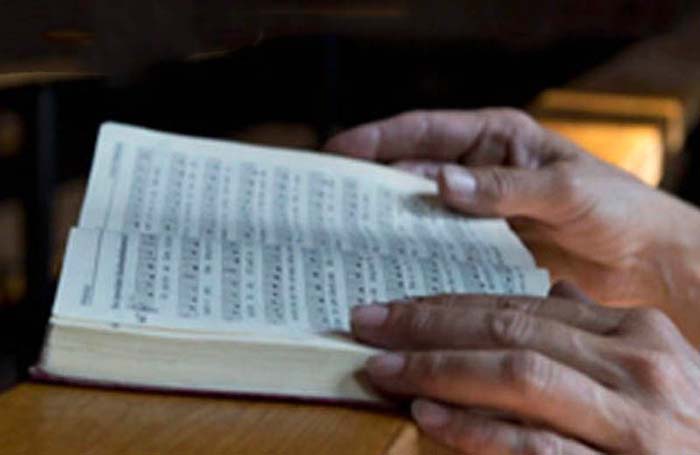

Singing from the same song sheet

Same song sheet

Developing a core repertoire

Sacred music has always been part of my life. My Mum sang and played piano and my Dad played piano and accordion. He also sang in the Male Voice choir at church. As a family, across the generations, we sang hymns and choruses for as long as I can remember. I grew up in a church with a strong tradition of quality music and congregational song and I sang there as a soloist, in the choir and as part of a youth group.

Most of us have favourite hymns that have special meaning or significance to us and so, to one degree or another, we almost unthinkingly develop a core repertoire; a selection of music that’s both familiar and uplifting. Actively developing and maintaining a core repertoire is, in fact, common practice among musicians across all genres. I believe that this practice translates very readily to family worship and congregational song and, indeed, that it’s fully appropriate. It all comes down to why we sing.

‘Great is the Lord, and greatly to be praised and His greatness is unsearchable. One generation shall commend Your works to another and shall declare Your mighty acts.’ (Psalm 145:3-4)

We can see from the words of this wonderful Psalm that we sing in praise of our matchless God. We can use our shared repertoire to declare His greatness and pass on our knowledge of Him to future generations. What’s more, a thoughtful and studied repertoire underlines Scripture and reinforces our understanding of theology so we can sing thoughtfully, worshipfully and with understanding. ‘I will sing with my spirit, but I will also sing with my understanding.’ (1 Corinthians 14:15b)

In his letter to the Colossians, the apostle Paul exhorted the congregation to ‘…let the message of Christ dwell among you richly as you teach and admonish one another with all wisdom through psalms, hymns, and songs from the Spirit, singing to God with gratitude in your hearts.’ (Colossians 3:16)

So we can see that our praise is to bring glory to God, to teach us wisdom, to build up one another and to express our gratitude. In effect, our core repertoire serves to nurture our faith and our church community.

Is there a difference between core repertoire for corporate, family and private worship? Yes, I think so but there’s plenty of room for significant overlap. My own personal repertoire tends to be more meditative but it’s good to sing music at home that we expect to sing in church. What are your favourite psalms and hymns?

When faith takes wing

When faith takes wing

Driving home from Crail a week or so ago, we noticed long sections of the hedgerow draped with what looked like spiders’ webs. From a visit to the Cornalees Centre in the hills above Greenock many years ago, when we saw a whole tree covered in a similar way, we knew that this wasn’t the work of spiders. The webs protect the caterpillars of one of the species of the Ermine Moth. The webs enable the caterpillars to feed to their hearts content on the leaves of the hedge or tree, safe from predators. They will strip every leaf from the host before departing.

The ranger at Cornalees, from whom we received all this information, also told us something that has stuck with me all this time. The caterpillars pupate, and when the moth finally begins to break out from the chrysalis, it has a tremendous struggle. Seeing this, well-meaning people sometimes try to help the moth escape by breaking off bits of the chrysalis. This is a disaster! It’s the effort the moth goes through to break out that gives its wings the strength to fly. Without that struggle it will never have the ability to take to the air. Far from helping, the people who do this are condemning the moth to an earthbound existence, making it easy prey for birds and other predators.

That set me thinking. It’s natural for us to try to help and protect those we love. We want to keep them from harm, and to make life as easy as possible for them. So we have a tendency to think that if God allows problems or suffering to enter our lives, He doesn’t love us. Nothing could be further from the truth! Speaking of the trials that afflict us all, the apostle Peter writes: ‘These have come so that your faith – of greater worth than gold, which perishes even though refined by fire – may be proved genuine and may result in praise, glory and honour when Jesus Christ is revealed.’ (1 Peter 1:7) God is accomplishing something precious in us as we continue to trust Him in our difficulties. Our faith is shown to be the thing of beauty that it’s meant to be.

James says something similar about the strength given to our faith through the struggles we have to endure. ‘Consider it pure joy, my brothers, whenever you face trials of many kinds, because you know that the testing of your faith produces perseverance.  Perseverance must finish its work so that you may be mature and complete, not lacking anything.’ (James 1:2-4) Far from harming us, the struggles through which our loving heavenly Father brings us, enable faith to take wing and soar, helping us to arrive at the glorious destiny He purposes for us.

God’s transforming grace

God's transforming grace

We enjoyed another lovely walk last week – along the abandoned railway line at Lower Largo. I counted more than thirty different types of wild flowers blooming on, and alongside, the path. Meadow Cranesbill was at its peak; but there were also plenty of Knapweed, thistles, wild roses, Scabious, Bird’s Foot Trefoil, Poppies, and countless others for which I don’t know the names. Hundreds of moths and butterflies were taking advantage of the bonanza to feed on the nectar – including the Six-Spotted Burnet Moth that loves the knapweed, while its caterpillars feast on Bird’s Foot Trefoil. The moth has glossy black wings with, as the name suggests, six spots. The pictures I’ve seen colour the spots red; but those we saw seemed more like fluorescent pink – dazzling! Our noses were treated to the scents of Meadowsweet and Rosa Rugosa. To one side of us we could hear the lapping of the waves on the shore, and on the other, the song of the skylark – though they were hard to spot against the bright blue sky.

And, of course, this abundant beauty exists on what would have been a scar on the landscape, when the railway line was removed as part of the Beeching Cuts of the 1960s. That prompted me to think of the way God heals the scars of sin in our own lives. Think of these lovely words from Psalm 40:2-3: ‘the Lord… lifted me out of the slimy pit, out of the mud and mire; he set my feet on a rock and gave me a firm place to stand. He put a new song in my mouth, a hymn of praise to our God. Many will see and fear and put their trust in the Lord.’ God’s grace transforms the ugly scars sin leaves on our lives. Consider the parable of the Lost Son we’ve been looking at recently on Sunday mornings. The young man who’d been living with pigs, and was so hungry he wanted to eat their food, must have been a terrible sight (and smell!) as he staggered home. Yet his father’s love transforms him in an instant: ‘Quick! Bring the best robe and put it on him. Put a ring on his finger and sandals on his feet.’ (Luke 15:22) And soon the rich aroma of roasting beef filled the air!

A missionary friend worked among the Quechua people of the highlands of Peru. Life in the Andes was very hard for them – particularly the women, who looked aged beyond their years. Yet when they discovered God’s love for them, and were enabled by the Holy Spirit to put their trust in Jesus, he said the years seemed to fall from their faces. God’s grace gave them hope, and joy, that transformed their lives. A novel we’re listening to at the moment describes how guilt over a specific crime aged a handsome man, leaving him ravaged. He knew nothing of God’s grace, and died a lonely death. But those whose hearts God opens to receive the good news about Jesus discover that His grace transforms their lives, bringing peace and joy alongside forgiveness.